
Tempered Glass
Heat-treated safety glass for architectural and interior applications where improved strength and safer breakage behaviour are required.
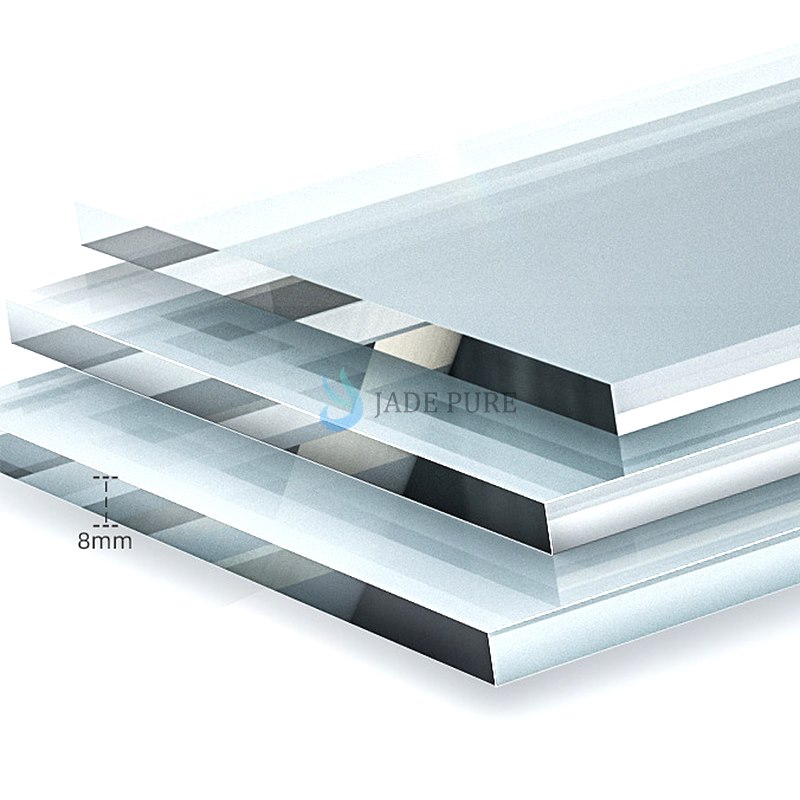
Heat-treated safety glass prepared to the final shape.
Tempered glass is produced by heating processed glass and rapidly cooling its surfaces. The treatment creates compressive stress that increases resistance to mechanical and thermal loading compared with annealed glass of the same thickness.
If breakage occurs, fully tempered glass is designed to fragment into many smaller pieces rather than large sharp shards. All cutting, edge polishing, drilling, notches and most decorative processing must be completed before tempering, so accurate drawings are essential.
Configuration options
- Clear, ultra-clear, tinted, coated or patterned base glass subject to tempering compatibility.
- Flat panels or project-specific curved panels.
- Polished, ground, bevelled or seamed edges as required.
- Holes, cut-outs and notches processed before heat treatment.
- Heat-soak testing and ceramic frit available when specified and technically applicable.
Design and production notes
- Tempered glass cannot be cut or drilled after tempering.
- Roller-wave, bow, edge lift and anisotropy expectations should be agreed for visually sensitive façades.
- Glass thickness and support conditions must match design loads and local codes.
- For overhead, floor or fall-protection applications, a laminated tempered construction may be required.
- Final tolerances and fragmentation requirements should be stated in the purchase specification.
Technical overview.
Use this summary to prepare an inquiry. Final values, tolerances and compliance requirements are confirmed in the written quotation and approved drawing.
- Process
- Cut, edge-worked and drilled before controlled heating and rapid quenching.
- Breakage mode
- Smaller fragments than ordinary annealed glass when fully tempered.
- Glass selection
- Clear, ultra-clear, tinted, coated and patterned options by review.
- Fabrication
- Edges, holes, notches, cut-outs, frit and shapes by drawing.
- Common uses
- Façades, doors, windows, partitions, shower screens, railings and furniture.
- Quotation input
- Thickness, dimensions, edgework, hole drawing, quantity and standard.
Frequently asked questions.
These answers explain the normal selection process. Send the project drawing or sample when a definitive technical answer is required.
Can tempered glass be resized after production?
No. Cutting or drilling after tempering can cause immediate breakage. The final drawing must be approved before heat treatment.
Is tempered glass suitable for a balustrade by itself?
The answer depends on the design, support, fall height and local code. Many guard and overhead applications require laminated tempered glass for post-breakage retention.
What should a fabrication drawing show?
Include overall size, thickness, edge finish, hole diameter and centre position, notches, cut-outs, corner radii and any frit or logo location.
Built around your project.
Dimensions, processing and configuration can be reviewed according to the application, drawings, production requirements and destination market.
Heat-treated safety glass
Custom edge processing
Drilling and cut-outs
Flat or project-shaped supply
Typical applications.
Share your project details with Jade Pure so our team can match the product or equipment configuration to the intended use.
Get a clearer, faster quotation.
Send the following information with your inquiry. Drawings or reference photos are welcome.
START YOUR INQUIRY